
TL;DR: Discovery Mode can increase streams by 100% to 400% for eligible tracks, but that stream volume rarely converts into proportional follower or save growth once the campaign ends. The royalty reduction is 30% on every stream served in Discovery Mode contexts. For artists with an existing audience and a track that already has strong engagement signals, it can be a useful tool. For artists trying to build a fanbase from scratch, it is not a substitute for paid media that targets specific audiences and returns measurable fan acquisition data.
What is Spotify Discovery Mode?
Spotify Discovery Mode is a Spotify for Artists feature that increases the likelihood of a song being recommended in Radio, Autoplay, and Spotify Mixes. In exchange, Spotify takes a 30% commission on recording royalties generated through Discovery Mode recommendation contexts.
How Spotify Discovery Mode Works
Spotify Discovery Mode lets artists and labels signal which tracks they want prioritized in algorithmic recommendation contexts. These contexts include Radio, Autoplay, and Spotify Mixes. They do not include Discover Weekly, Release Radar, or editorial playlists.
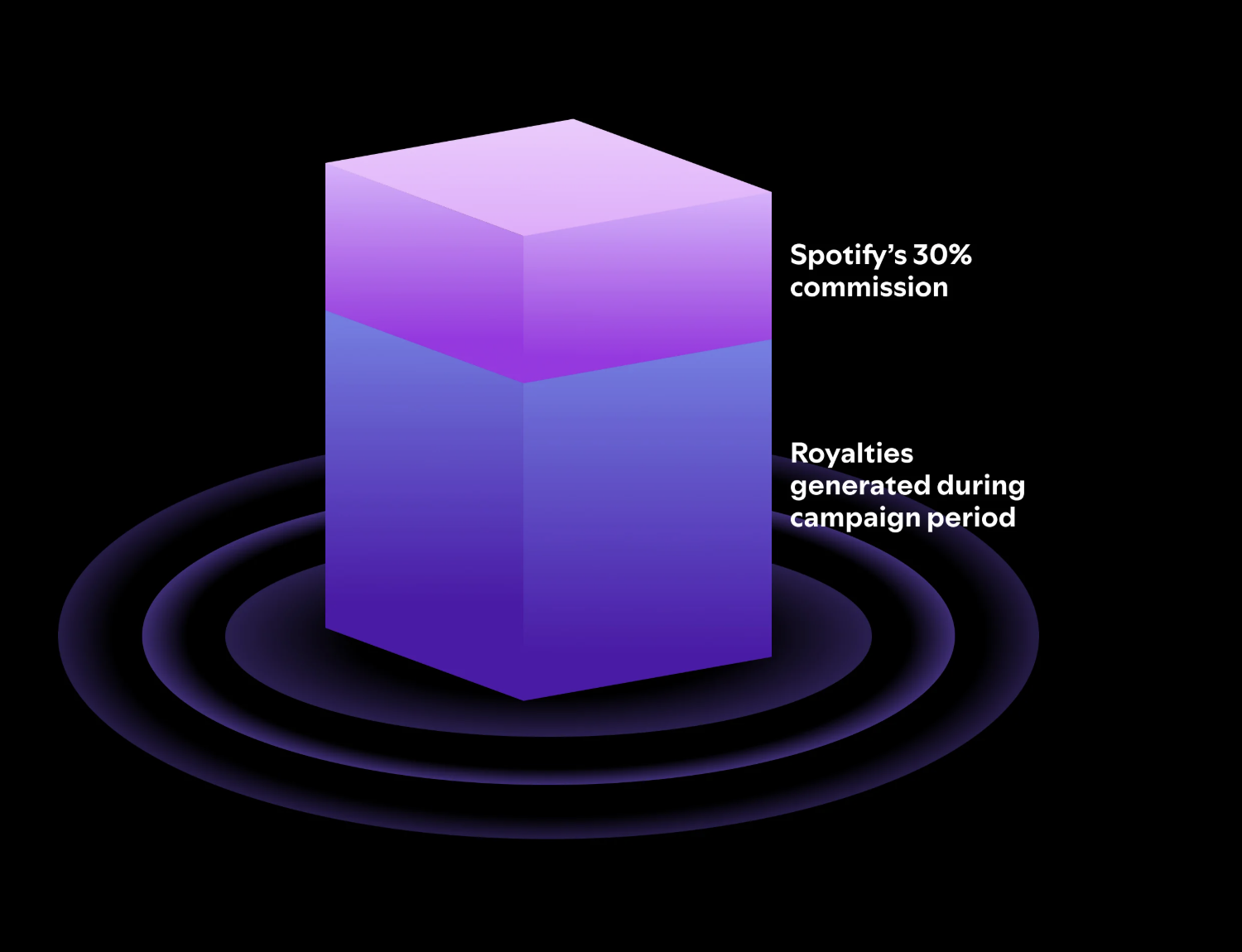
Spotify does not charge an upfront fee. Instead, the platform takes a 30% commission on recording royalties for streams served through Discovery Mode contexts. Streams from on-demand plays, playlist saves, or any other source remain at the standard rate.
Campaigns are set up monthly between the 11th of the month and the last day of the month at 12 AM UTC.
Spotify Discovery Mode Requirements and Eligibility
To be eligible, an artist team needs to meet all of the following:
- At least 25,000 monthly listeners
- At least three eligible songs
- An active Spotify for Artists team registered in a supported country
Individual tracks must have been on Spotify for at least 30 days and have accumulated at least 20 streams in Discovery Mode contexts within the last 28 days.
Spotify Discovery Mode Royalty Reduction Explained
At the standard Spotify per-stream rate, roughly $0.003 to $0.005 per stream for most independent artists, a track earning 10,000 streams per month generates $30 to $50 in royalties.
Discovery Mode applies a 30% reduction to streams served in Radio and Autoplay contexts. The royalty reduction is not hypothetical. It applies from the moment the campaign is active.
The break-even point typically arrives when Discovery Mode generates at least 40% to 50% more streams than would have been earned organically. Below that threshold, the revenue sacrifice outweighs the exposure benefit.
The complication is measurement. The platform does not show Discovery Mode stream attribution separately from organic algorithmic streams in standard artist dashboards. That makes it difficult to calculate whether the incremental stream volume is sufficient to offset the royalty reduction.
What Spotify Claims About Performance
Spotify publishes one consistent set of numbers for Discovery Mode. On average, artists who have used Discovery Mode have seen:
- 50% increase in saves
- 44% increase in playlist adds
- 37% increase in new followers during their first month of use
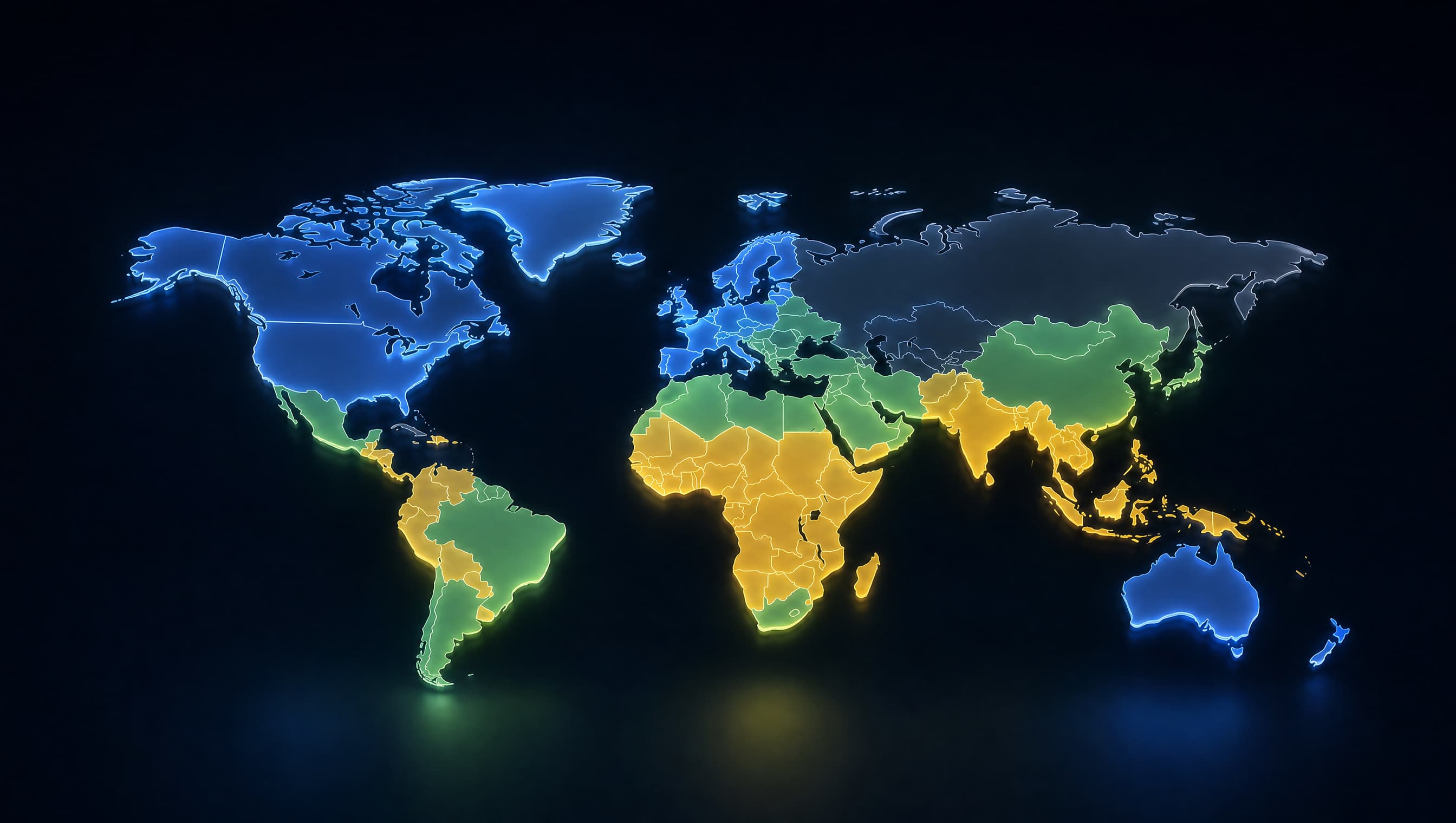
Spotify also reports that 58% of first-time listens from Discovery Mode come from listeners outside the artist’s home country, and tracks in Discovery Mode are typically streamed in approximately 100 markets during the campaign period.
These figures come from Spotify’s own reporting. They represent averages across all artists using the feature, which includes established acts with large existing catalogs.
Spotify Discovery Mode Results: What Artists Are Actually Reporting
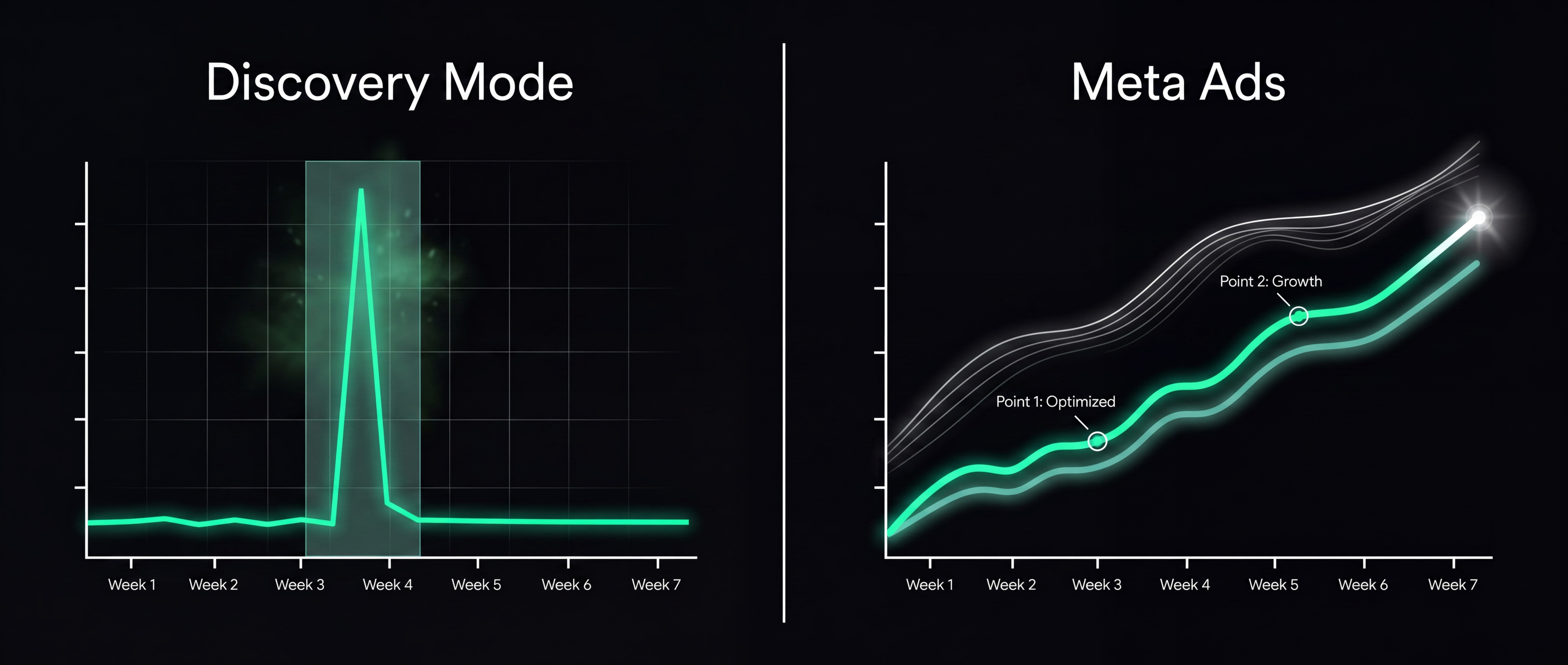
The pattern across artist communities in 2025 and 2026 is consistent. Stream counts go up while campaigns run. Monthly listener counts go up. Follower and save growth is smaller in proportion. When the campaign ends, the algorithmic lift tends to drop back toward baseline.
The distinction that matters here is between a listener and a fan. A stream registered through Radio or Autoplay means a listener did not skip the track. It does not mean they saved it, followed the artist, or returned to listen again. Those behaviors are what Spotify’s algorithm uses to decide whether to continue recommending an artist’s music.
Discovery Mode generates passive listening exposure. Whether those listeners engage further depends entirely on the music.
The algorithm weights save rate and repeat-listen ratio roughly three times higher than raw stream volume when deciding which tracks to push into Discover Weekly and Release Radar.
There is no targeting mechanism inside Discovery Mode. Spotify picks who hears the track based on algorithmic signals, not on any targeting parameters the artist sets.
The Controversy Around Disclosure
Discovery Mode has faced ongoing criticism for how the feature is presented to listeners. A class-action lawsuit filed in November 2025 alleged that Discovery Mode operates as a deceptive pay-for-play program, claiming Spotify misleads listeners by suggesting recommendations are organic when they are in fact influenced by royalty agreements.
The lawsuit was moved into arbitration in May 2026 after Spotify successfully argued that its terms of use constituted sufficient disclosure. Spotify’s position is that Discovery Mode is clearly disclosed in the app and on its website.
Organic discovery carries credibility that paid promotion, whether through Discovery Mode or any other channel, does not fully replicate.
The disclosure debate matters to artists in a practical sense. If listeners eventually understand that algorithmic recommendations can reflect commercial arrangements rather than pure engagement signals, the value of those recommendations may change.
Spotify Discovery Mode vs Meta Ads
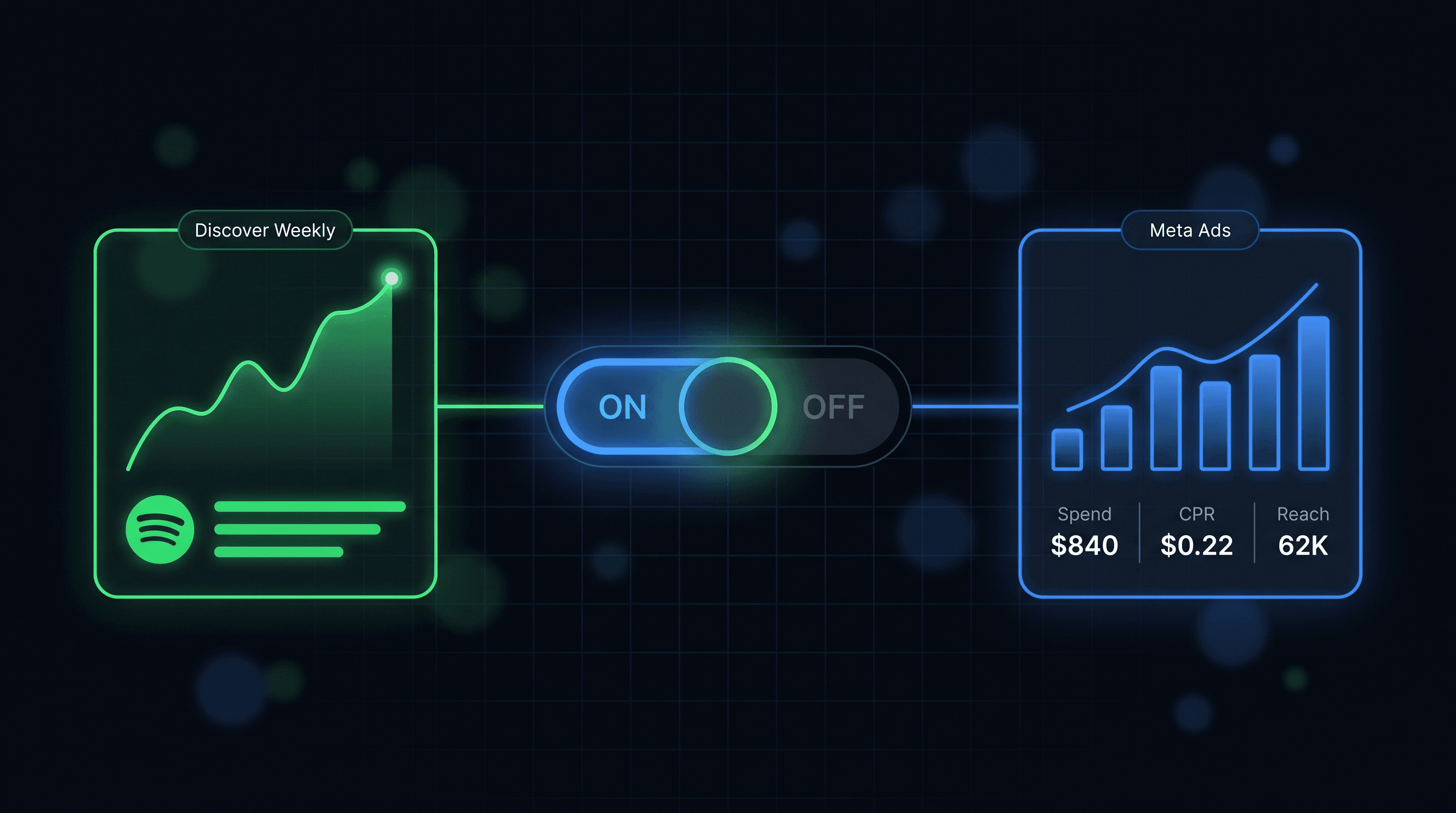
The two channels solve different problems. Discovery Mode increases the probability that Spotify’s own algorithm serves a track to passive listeners. Meta ads bring targeted listeners from outside Spotify directly to a specific track or smart link.
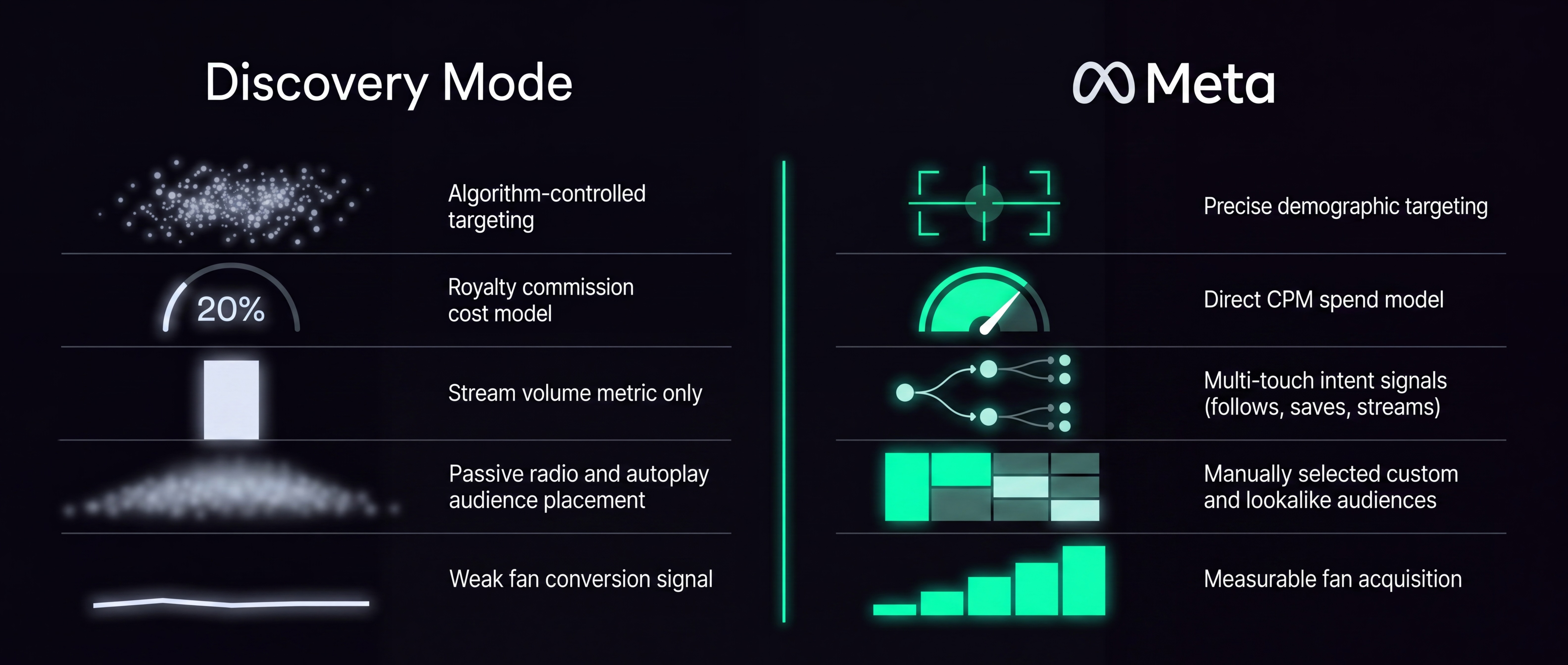
Targeting control: Discovery Mode offers none. Meta ads allow precise targeting by location, interest, age, behavior, and lookalike audiences built from existing fan data.
Cost structure: Discovery Mode applies a 30% royalty reduction on qualifying streams. Meta ads require an upfront budget allocated by the advertiser.
Attribution: Discovery Mode returns platform-side aggregate data inside Spotify for Artists. Meta ads, when wired through a smart link with Spotify-side measurement, return click-through attribution all the way to streams, saves, followers, and listeners.
Audience selection: Discovery Mode is algorithm-driven. Meta ads are defined by the advertiser.
Measurable fan acquisition: Not available in Discovery Mode. Available with Meta ads when attribution is properly configured.
Measure What Actually Matters
The more meaningful difference is not cost per stream. It is what happens after the stream.
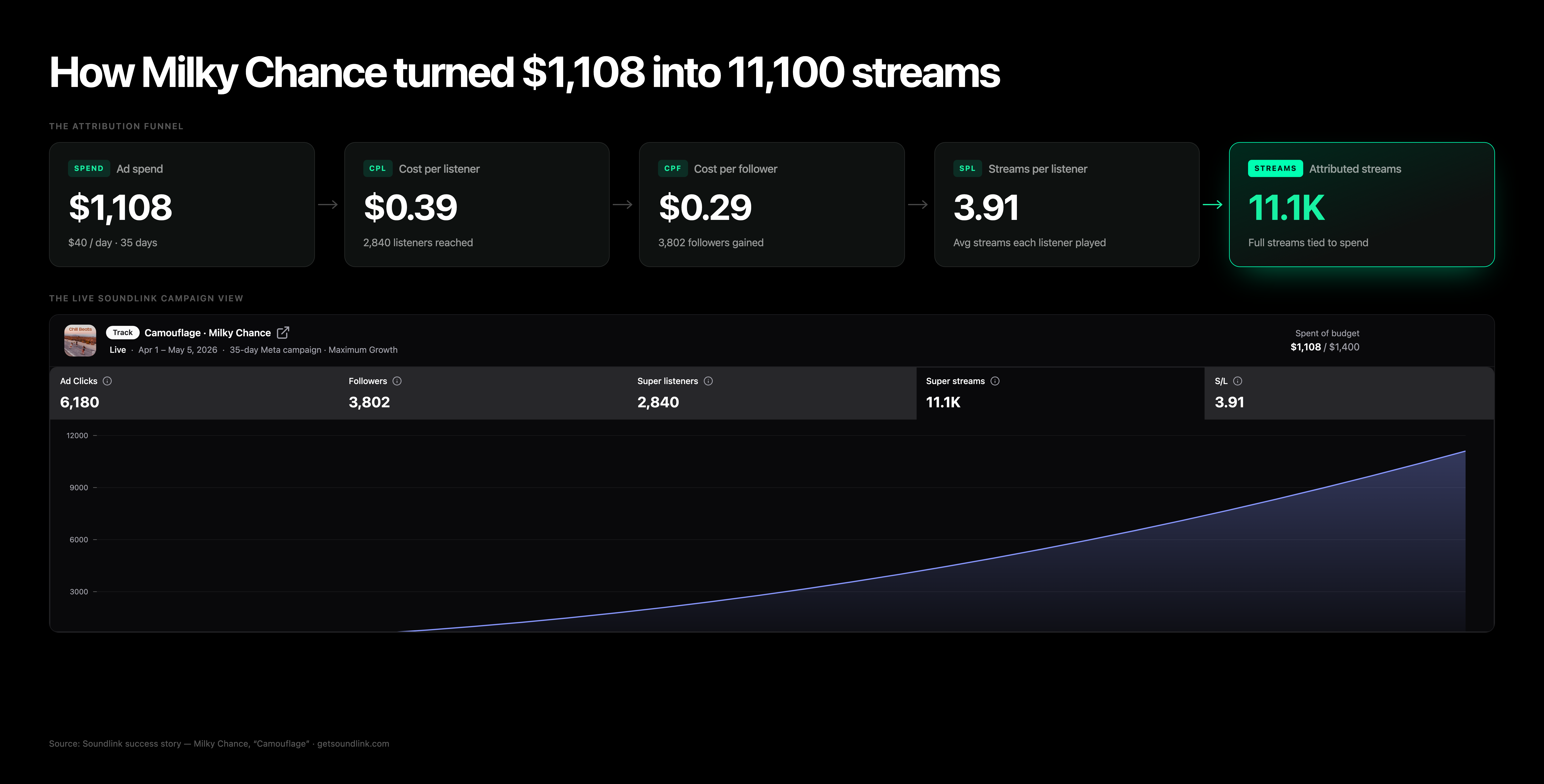
Soundlink tracks cost per listener, cost per follower, cost per save, and cost per stream directly from Spotify engagement data. This lets artists and labels understand whether promotion is creating fans rather than simply generating streams — something Discovery Mode cannot tell you.
Meta ads structured through a Soundlink smart link capture Spotify engagement data on the other side of every click. When that attribution is in place, the operator can see exactly how many clicks converted into streams, saves, followers, and listeners. Discovery Mode provides no equivalent attribution path.
Spotify Discovery Mode vs Marquee
Marquee is a paid ad unit that displays full-screen recommendations to potential listeners and costs between $0.30 and $0.70 per click with a minimum spend of $100. Discovery Mode has no upfront cost but requires accepting a 30% royalty reduction on qualifying streams.
Artists using Discovery Mode on tracks with save rates above 4% see a stronger boost in algorithmic playlist impressions. Marquee performs best for targeting lapsed listeners who already know an artist’s music.
The key distinction: Marquee reaches listeners who have some prior familiarity with an artist. Discovery Mode reaches listeners cold. Neither offers the targeting precision or attribution depth of Meta ads.
Spotify Discovery Mode Pros and Cons
| Pros | Cons |
|---|---|
| No upfront budget required | 30% royalty reduction on all qualifying streams |
| Easy to activate inside Spotify for Artists | No targeting control over who hears the track |
| Uses Spotify’s own recommendation infrastructure | No attribution data connecting streams to fan acquisition |
| Can generate significant stream volume for eligible tracks | Growth disappears when the campaign ends if engagement signals are weak |
| Reaches international markets automatically | Break-even requires 40% to 50% incremental stream lift just to cover the royalty cost, and excludes Discover Weekly and Release Radar |
Who Should Use Discovery Mode?
Discovery Mode is most effective for artists who already have enough listener data for the algorithm to find additional matching audiences. A track that already has high save rates and repeat listens gives the algorithm strong signals to work with. Discovery Mode amplifies those signals by increasing the track’s priority weight in Radio and Autoplay contexts.
For a track with weak engagement data, Discovery Mode has less to amplify. If those signals are absent, the feature generates streams but not the quality engagement that triggers sustained algorithmic growth.
Discovery Mode works better as an acceleration tool than as a discovery tool. It can accelerate momentum that already exists. It is less effective at creating momentum from scratch.
Artists who benefit most:
- Established acts with catalog tracks that have existing save rate momentum
- Artists running Discovery Mode selectively on new releases, not across an entire catalog
- Labels testing Discovery Mode after an initial Meta ads push has seeded engagement data
Artists who benefit least:
- Independent artists with under 25,000 monthly listeners (ineligible)
- Artists trying to build a fanbase from scratch with no existing engagement signals
- Any artist who needs to report cost-per-fan data to stakeholders or clients
The Measurement Problem
The central limitation of Discovery Mode, from an operator perspective, is measurement.
Spotify for Artists shows monthly listeners, streams, saves, and follower counts. There is no native way inside the platform to see which streams came from Discovery Mode contexts versus organic algorithmic placement versus direct listener navigation.
This means an artist running Discovery Mode cannot determine:
- Whether the incremental streams generated covered the 30% royalty cost
- Whether the saves and follows reported were above what would have happened organically
- Whether the algorithmic momentum from the campaign persisted after the campaign ended
- Whether Discovery Mode listeners converted into higher-quality engagement than organic listeners
The contrast with properly structured paid campaigns is significant. When Meta ads send traffic through a smart link with Spotify-side measurement in place, the attribution path is complete. An operator can see cost per listener, cost per follower, and cost per save, calculated from actual campaign spend and actual Spotify engagement outcomes. Discovery Mode offers no equivalent metric.
For label operators and managers evaluating marketing efficiency across multiple artists or releases, the absence of cost-per-fan data makes it difficult to compare against alternative spend.
What a Combined Strategy Looks Like
Discovery Mode and Meta ads are not mutually exclusive. The question is how to sequence them and what role each plays.
A track needs existing engagement signals for Discovery Mode to work efficiently. Meta ads can create those signals before a Discovery Mode campaign runs. Running a Meta campaign during a release window drives targeted listeners to the track, generates saves and follows from an audience specifically chosen for fit, and gives Spotify’s algorithm behavioral data to work with. A Discovery Mode campaign run after that initial phase has stronger signals to amplify.
The attribution difference still applies. Discovery Mode streams during the amplification phase cannot be traced back to individual listener acquisition. Meta campaigns can. For operators who need to report cost-per-fan to clients or stakeholders, that distinction matters.
In 2026, the most effective Spotify promotion method for triggering algorithmic growth combines precision-targeted external ads that send the right listeners directly to tracks, giving Spotify the behavioral signal data it needs to recommend music through Discover Weekly, Radio, and Autoplay.
Discovery Mode fits into that model as a follow-on tool, not as a standalone acquisition strategy.
Is Spotify Discovery Mode Worth It?
For artists with existing momentum and strong engagement signals on a track, Discovery Mode can amplify that momentum at no upfront cost. The royalty trade-off is acceptable if the incremental stream lift clears the 40% to 50% break-even threshold.
For artists trying to build a fanbase from scratch, Discovery Mode is the wrong starting point. It cannot target the right listeners, cannot tell you what each fan cost, and cannot sustain growth once the campaign ends without underlying engagement data to amplify.
The fundamental issue is not whether Discovery Mode works. It is what it measures. Streams are not fans. And a tool that reports streams without telling you how many fans were created is a tool that makes it very hard to know whether your promotion budget is working.
How Soundlink Approaches This
Soundlink’s paid campaigns run on Meta and TikTok with Spotify-side measurement connected to each campaign. The platform reports cost per listener, cost per follower, and cost per save directly from Spotify streaming data rather than relying on landing page proxies or ad platform conversion signals alone.
This means artists, managers, and labels running paid campaigns through Soundlink can see exactly what each dollar of ad spend produced in terms of Spotify fan acquisition. Discovery Mode, by contrast, tells you how many streams happened but not how many fans were acquired or what they cost.
That measurement capability matters most for teams managing multiple releases simultaneously or for labels evaluating marketing efficiency across a roster. The data Soundlink returns makes it possible to compare campaigns, identify what is working, and allocate budget toward the approaches that produce the lowest cost per fan.
FAQ
Does Spotify Discovery Mode guarantee more streams?
Discovery Mode does not guarantee that a track will be served more often. It adds a priority signal to the algorithm. Whether that signal results in increased streams depends on how the algorithm interprets the track’s existing engagement data and how it performs with the listeners it reaches.
Does Discovery Mode affect Discover Weekly or Release Radar?
Spotify has stated that Discovery Mode is not used in all algorithmic playlists and specifically excludes popular ones like Discover Weekly. The feature applies to Radio, Autoplay, and Spotify Mixes contexts.
Is the 30% royalty reduction applied to all streams?
The 30% commission is applied to recording royalties generated from streams of selected songs in Discovery Mode contexts only. All other streams remain commission-free.
Who is eligible to use Discovery Mode?
Artists need at least 25,000 monthly listeners, at least three eligible songs, and an active Spotify for Artists team registered in a supported country. Individual tracks must have been on Spotify for at least 30 days and have received at least 20 streams in Discovery Mode contexts within the last 28 days.
Can Discovery Mode replace paid advertising for music promotion?
Discovery Mode and paid advertising operate differently. Discovery Mode increases the probability of algorithmic placement within Spotify. Paid advertising on Meta or TikTok brings targeted external traffic to a track. The two channels do different jobs. Discovery Mode cannot target specific audiences or return cost-per-fan data. Paid advertising can.
How does Discovery Mode compare to Spotify Marquee?
Marquee is a paid ad unit that displays full-screen recommendations to potential listeners and costs between $0.30 and $0.70 per click with a minimum spend of $100. Discovery Mode has no upfront cost but requires accepting a 30% royalty reduction on qualifying streams. Marquee performs best for targeting lapsed listeners who already know an artist’s music. Discovery Mode reaches cold listeners algorithmically.
Is Spotify Discovery Mode a form of payola?
A class-action lawsuit filed in 2025 alleged that Discovery Mode constitutes modern payola by allowing tracks to be prioritized in exchange for royalty reductions without adequate disclosure to listeners. The lawsuit was moved into arbitration in May 2026 after Spotify successfully argued that its terms of use provided sufficient disclosure. The debate around disclosure and transparency in algorithmic recommendations is ongoing.