
TL;DR: Most music promotion campaigns are measured at the wrong stage. Clicks tell you the ad worked. They do not tell you whether the campaign worked. A music marketing funnel breaks the listener journey into measurable stages, from first exposure through streams, saves, follows, and repeat listening, so you can identify exactly where a campaign is working and where it is leaking, and scale what actually builds a real audience.
Most artists think about music promotion as a creative challenge.
They ask whether the song is strong enough, whether the video hook is good enough, whether the audience targeting feels right, and whether the campaign is getting enough attention. Those questions matter, but they are only part of the picture.
Once you start promoting music seriously, you realize that the real challenge is not just getting attention. The real challenge is understanding what happens after someone notices the song.
That is where music promotion starts to look a lot like software growth.
In software, teams obsess over the user journey. They want to know how someone moves from a website visit to a signup, from signup to activation, from activation to repeat usage, and from repeat usage to long-term retention. Every step matters because every step reveals whether the product is creating value.
Music has a similar journey.
A listener might see a 15-second video on Instagram, click a link, land on a music page, open Spotify, play the song, save it, visit the artist profile, stream another track, follow the artist, and eventually become a repeat listener.
That is not random. That is a funnel.
And if you are promoting music on Spotify, Meta, TikTok, YouTube, or any other platform, understanding that funnel is one of the most important things you can do.
What Is a Music Marketing Funnel?
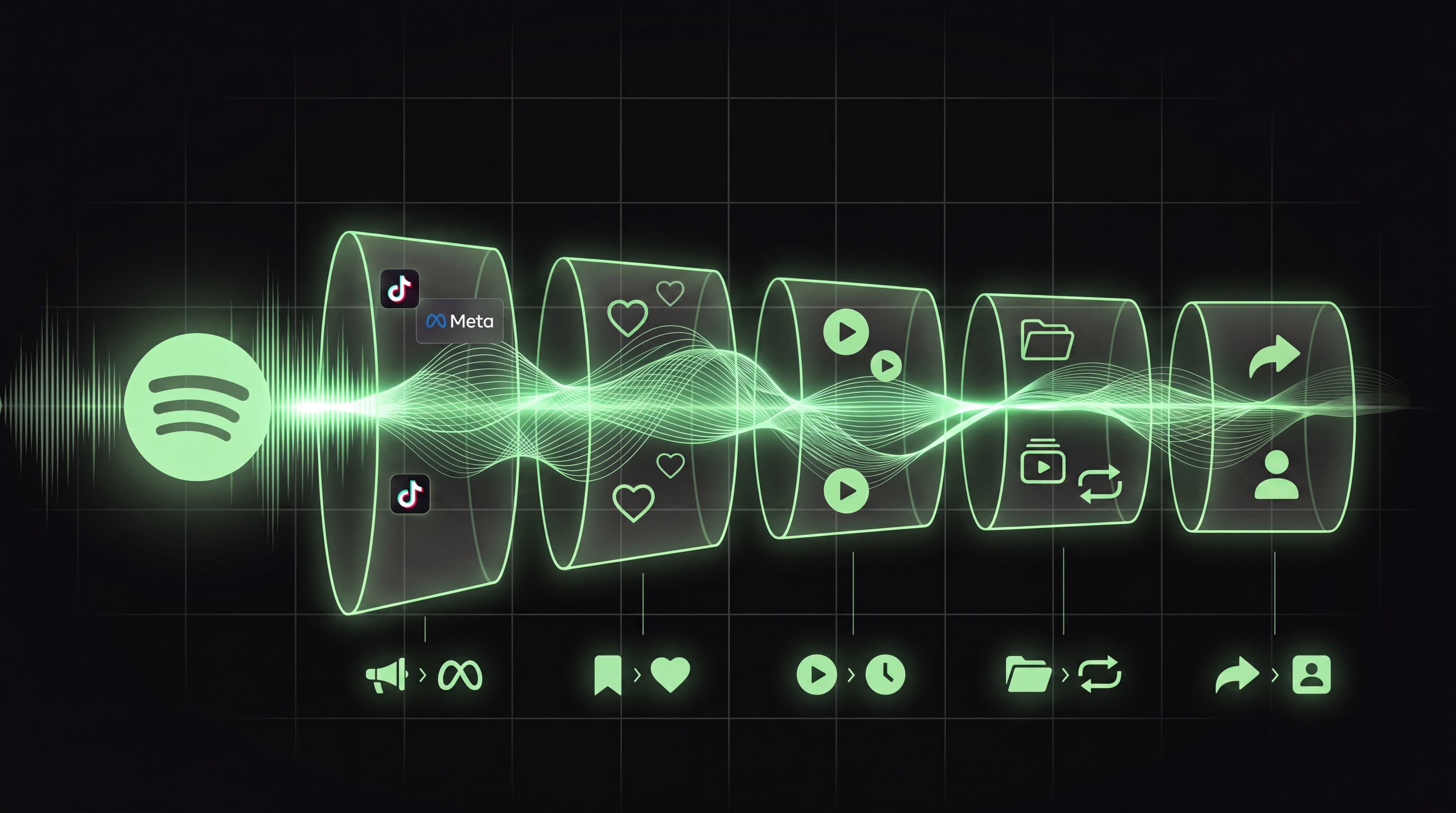
A music marketing funnel is the journey someone takes from first discovering an artist to becoming an engaged listener or fan. It spans awareness, intent, activation, engagement, and retention — and for paid social campaigns driving to Spotify, each stage requires separate measurement to understand where the campaign is working and where it is leaking.
At the top of the funnel, the person may only see a piece of content or an ad. In the middle of the funnel, they show intent by clicking, visiting a landing page, or choosing a streaming platform. At the bottom of the funnel, they take meaningful actions such as streaming, saving, following, adding the song to a playlist, listening again, or exploring more of the artist’s catalog.
The mistake many artists make is treating the funnel as if it ends at the click.
It does not.
A click only tells you that someone was curious enough to leave the ad. It does not tell you whether they listened. It does not tell you whether they liked the song. It does not tell you whether they saved it, followed the artist, or came back later.
That is why music marketers need to measure the full journey.
The real question is not “Did people click?”
The better question is:
Did those clicks turn into real listener behavior?
The Music Funnel Looks a Lot Like a Product Funnel
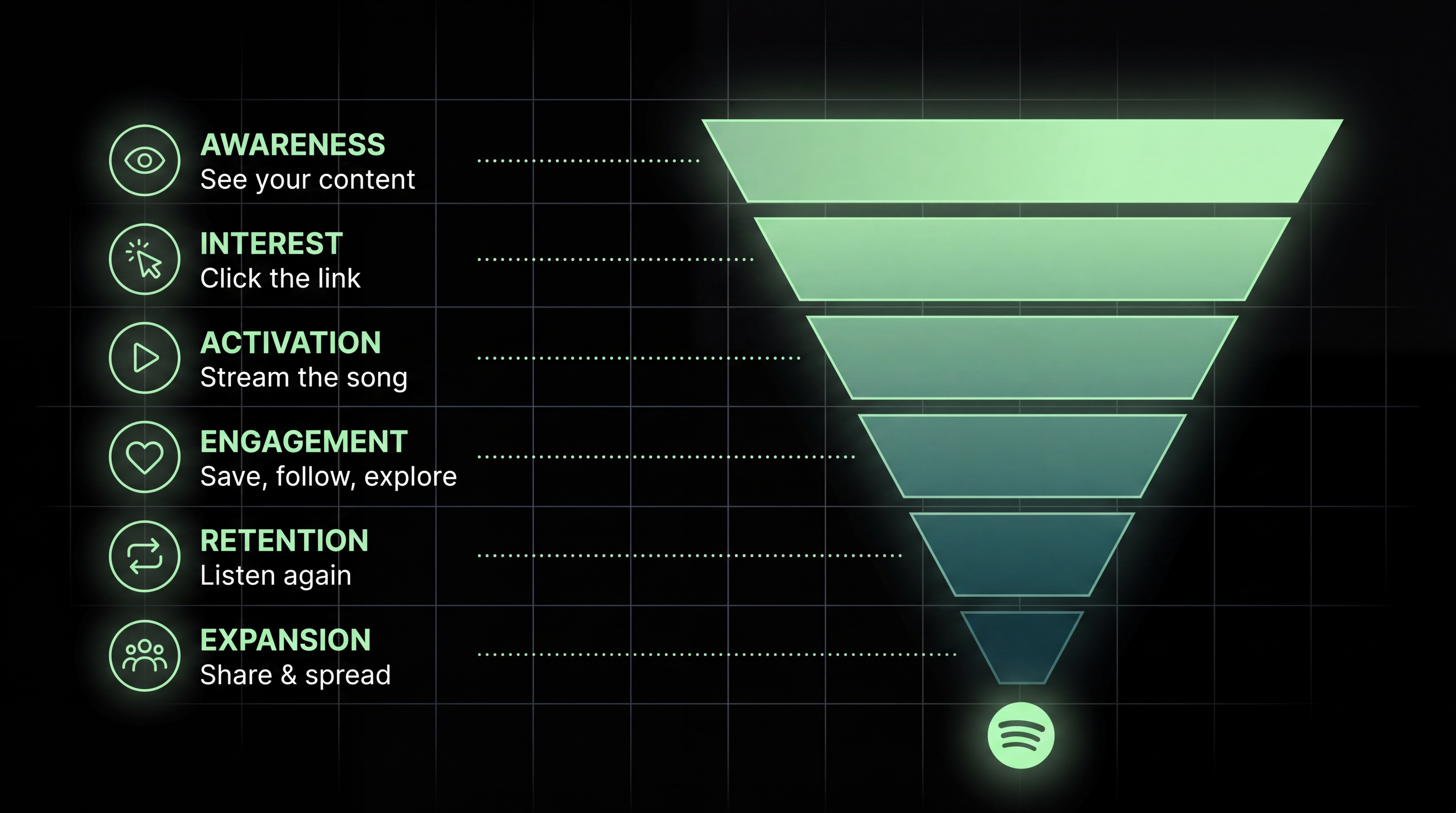
The comparison between music marketing and software growth becomes clearer when you map the two journeys side by side.
| Funnel Stage | Software Product Example | Music Promotion Example |
|---|---|---|
| Awareness | Someone sees an ad or visits a website | Someone sees a Reel, TikTok, YouTube Short, or Meta ad |
| Interest | Someone clicks to learn more | Someone clicks the music link or smart link |
| Activation | Someone signs up or completes onboarding | Someone opens Spotify and streams the song |
| Engagement | Someone uses a core feature | Someone saves the song, adds it to a playlist, or visits the artist profile |
| Retention | Someone comes back and uses the product again | Someone listens again or becomes a repeat listener |
| Expansion | Someone invites others or upgrades | Someone follows the artist, shares the song, or streams more of the catalog |
This framework changes how you evaluate campaigns.
Instead of asking whether a campaign generated activity, you start asking where that activity happened in the funnel. Did the creative create attention? Did the landing page convert that attention into intent? Did the streaming platform handoff work? Did the song create enough value for the listener to save it or come back?
Each stage tells you something different.
A high click-through rate may mean the creative is strong. A high Spotify click rate may mean the landing page is doing its job. A high save rate may mean the song is reaching the right listeners. Repeat streams may indicate that the campaign is not just creating traffic, but attracting people who actually want to hear the song again.
That is the difference between surface-level promotion and measurable audience growth.
Why Clicks Are Not Enough
Clicks are easy to measure, which is why they often become the default metric. But easy to measure does not mean important.
In software, no serious growth team would judge a campaign only by website traffic. A campaign that drives thousands of visitors but no signups, no activation, and no retention is not a successful growth campaign. It is just traffic.
Music works the same way.
A campaign can produce cheap clicks and still fail to grow an artist. People may click because the video was visually interesting, the hook was provocative, or the targeting was broad. But if those clicks do not turn into streams, saves, followers, repeat listening, or catalog exploration, the campaign is not creating much long-term value.
This is especially important for artists running Meta ads to Spotify.
A campaign may look good inside Ads Manager because it has a low cost per click. But Spotify may tell a different story. The listeners may not be showing up. Or they may stream once and leave. Or they may never save the track, follow the artist, or explore another song.
That is why clicks should be treated as a diagnostic metric, not the final measure of success.
Clicks tell you that the first step worked. They do not tell you that the campaign worked.
The Metrics That Matter in Spotify Promotion
To measure music promotion properly, you need to separate top-of-funnel metrics from listener-quality metrics.
Top-of-funnel metrics help you understand whether people are noticing and responding to your creative. These include:
- Impressions
- Reach
- Video views
- Thumb-stop rate
- Click-through rate
- Cost per click
- Landing page views
These metrics are useful, but they are not enough.
The more important question is what happens after the click. For Spotify promotion, that means looking at metrics such as:
- Listeners
- Streams
- Streams per listener
- Saves
- Save rate
- Followers
- Playlist adds
- Profile visits
- Source of streams
- Repeat listening
A listener who streams once and disappears is different from a listener who saves the song. A listener who saves the song is different from someone who follows the artist. A follower who later streams new releases is more valuable than someone who only clicked because an ad was cheap.
This is where music promotion becomes more like product analytics.
In product growth, teams care about activation and retention because those behaviors show whether users are receiving value. In music, saves, repeat streams, follows, and catalog listening serve a similar role. They are signals that the listener did more than sample the track. They found enough value to continue the relationship.
Why Listener Quality Matters More Than Raw Stream Count
Not every stream has the same strategic value.
A stream from a listener who immediately skips, never saves, and never returns is very different from a stream from someone who listens repeatedly, saves the track, follows the artist, and explores the catalog.
This is why artists and music marketers should avoid optimizing only for the cheapest possible stream. Cheap activity can look good in a report while doing very little to build a real audience.
The stronger question is:
What kind of listeners is the campaign bringing in?
A smaller campaign that produces higher save rates, stronger repeat listening, and more profile exploration may be more valuable than a larger campaign that produces more one-time streams. The first campaign is creating evidence of real demand. The second may only be creating temporary attention.
This matters because streaming growth is not only about what happens during the campaign. It is also about what happens after the campaign.
If the right listeners engage deeply, that behavior can support future discovery. If the wrong listeners bounce, the campaign may produce a short spike with no lasting effect.
The Algorithm Responds to Behavior, Not Hope
Many artists talk about the Spotify algorithm as if it is something mysterious that either chooses them or ignores them. A more useful way to think about it is this: recommendation systems need listener behavior to learn from.
When people stream, save, follow, replay, add songs to playlists, and explore similar music, those actions create signals. Those signals help platforms understand which listeners are responding and what kinds of audiences may be relevant.
This does not mean every paid campaign will trigger algorithmic growth. It also does not mean every save automatically leads to Discover Weekly, Radio, or autoplay. But it does mean that listener behavior matters.
Promotion can create the first push. The audience decides whether that push has momentum.
That is why the goal of music marketing should not simply be to buy streams. The goal should be to introduce the right song to the right listeners in a way that creates meaningful engagement.
Good Music Marketing Starts With a Hypothesis
Strong product teams do not launch experiments randomly. They start with a hypothesis.
They might believe that a specific audience has a specific problem, that a new message will improve conversion, or that a different onboarding flow will increase activation. Then they test the idea and measure what happens.
Music marketers should think the same way.
Before launching a campaign, define what you are trying to learn.
You might test whether one audience produces better save rates than another. You might compare whether a lyric-focused video outperforms a performance clip. You might test whether a direct song hook drives better Spotify streams than a broader artist-story ad. You might compare markets based not on cost per click, but on listener quality.
Without a hypothesis, campaign data becomes noise. You may see numbers move, but you will not know what they mean.
With a hypothesis, every campaign becomes a learning system.
You are not just promoting a song. You are learning which message, audience, creative, and path produces the strongest listener behavior.
Measure the Funnel Before You Scale
One of the most common mistakes in music promotion is scaling too early.
A campaign starts getting clicks, the cost per click looks attractive, and the instinct is to increase budget. But if you do not know what is happening deeper in the funnel, scaling can simply amplify waste.
For example, if people are clicking but not streaming, the issue may be the landing page, the platform handoff, the audience quality, or a mismatch between the ad and the song.
If people are streaming but not saving, the campaign may be reaching casual listeners rather than likely fans.
If people are saving but not following, the song may be stronger than the artist brand or the catalog experience.
If people are following and listening again, the campaign may be attracting real fans.
This is why each stage of the funnel needs to be measured separately.
At the awareness stage, look at whether the creative earns attention.
At the intent stage, look at whether people click through and choose a streaming destination.
At the activation stage, look at whether those clicks become actual listeners and streams.
At the engagement stage, look at saves, playlist adds, profile visits, and follows.
At the retention stage, look at repeat listening, streams per listener, and returning listeners.
When you understand where the funnel is working and where it is leaking, your next move becomes much clearer.
Attribution Is the Missing Layer in Music Marketing
The hard part is that music marketing data is fragmented.
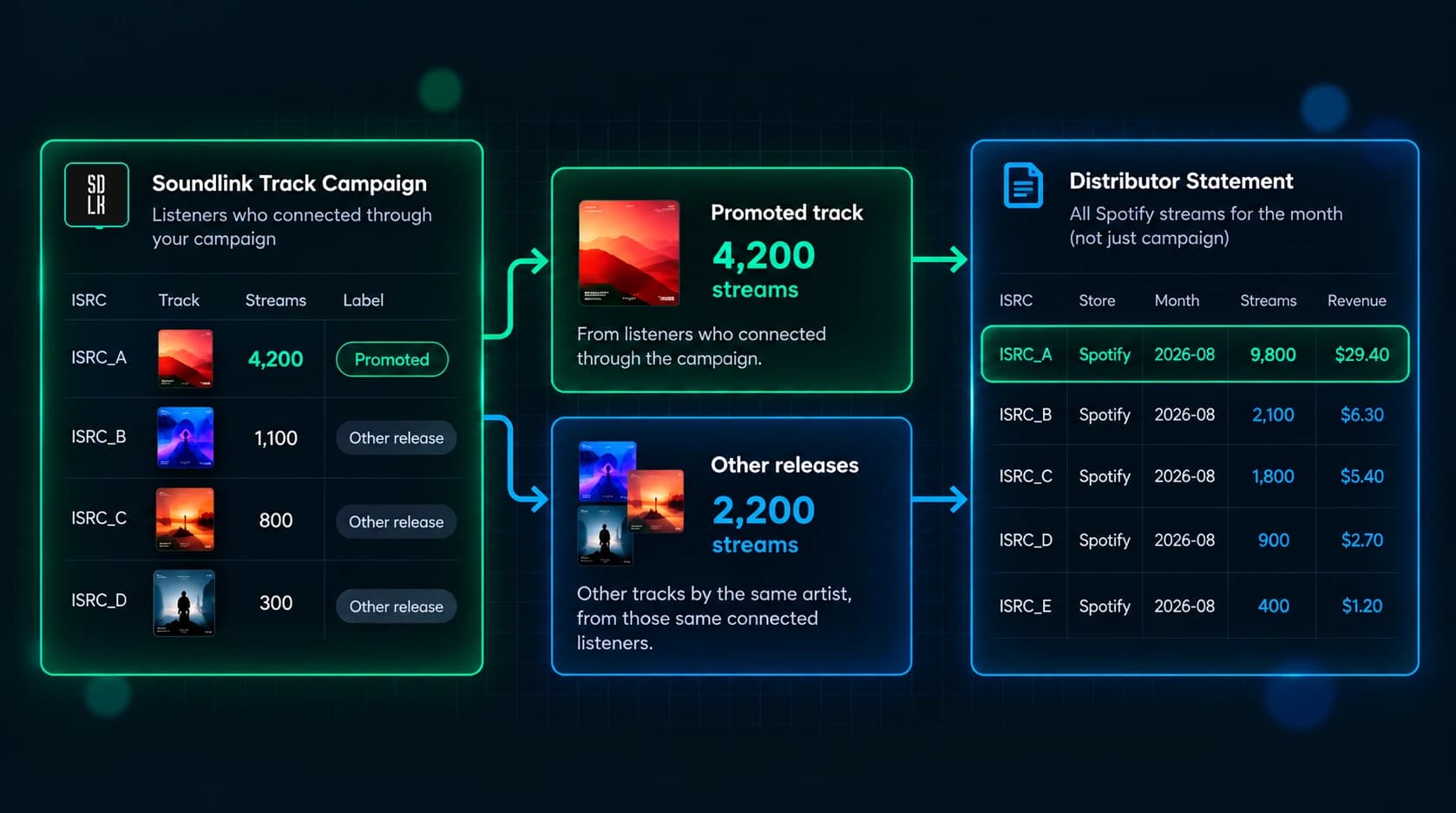
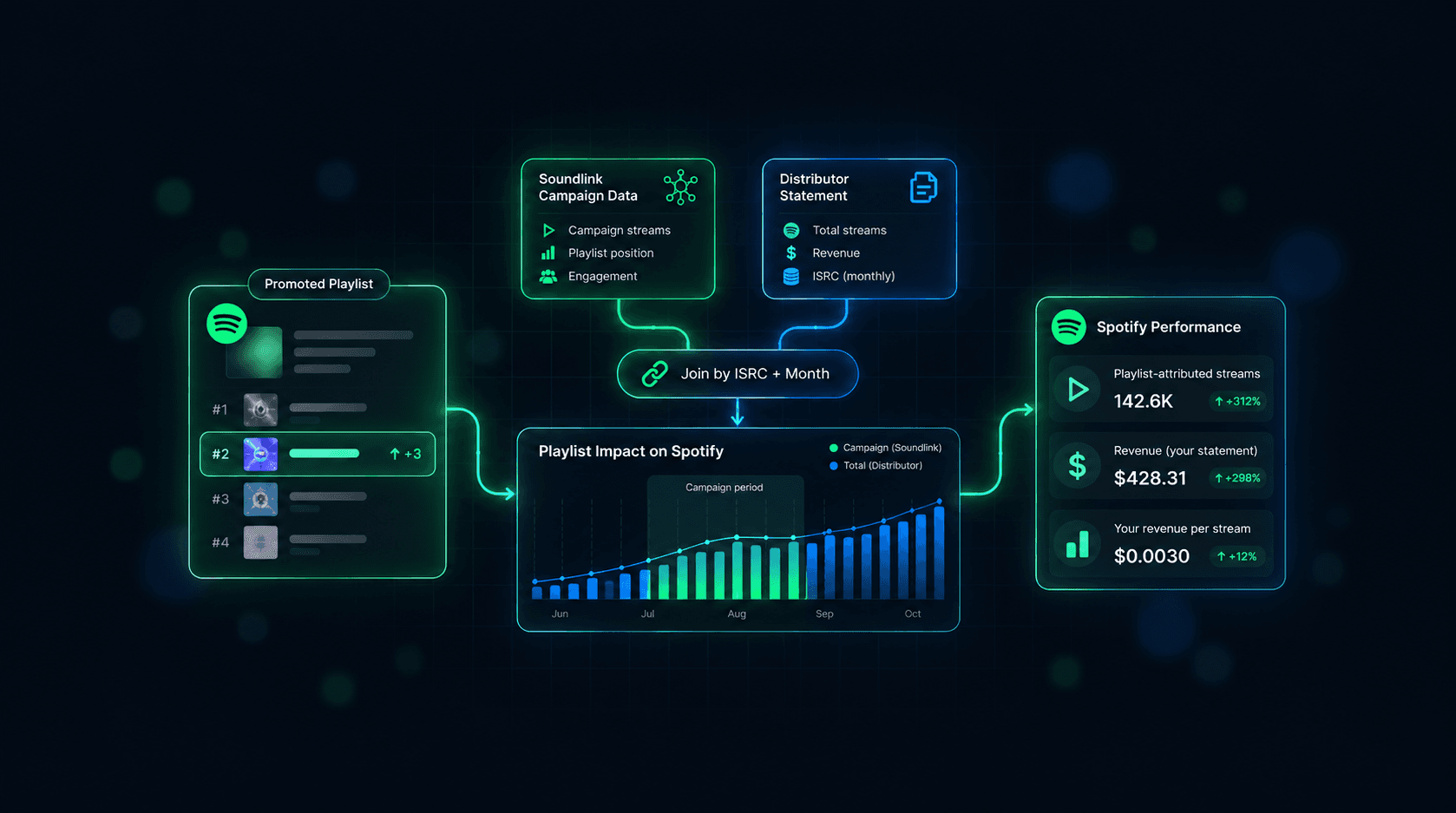
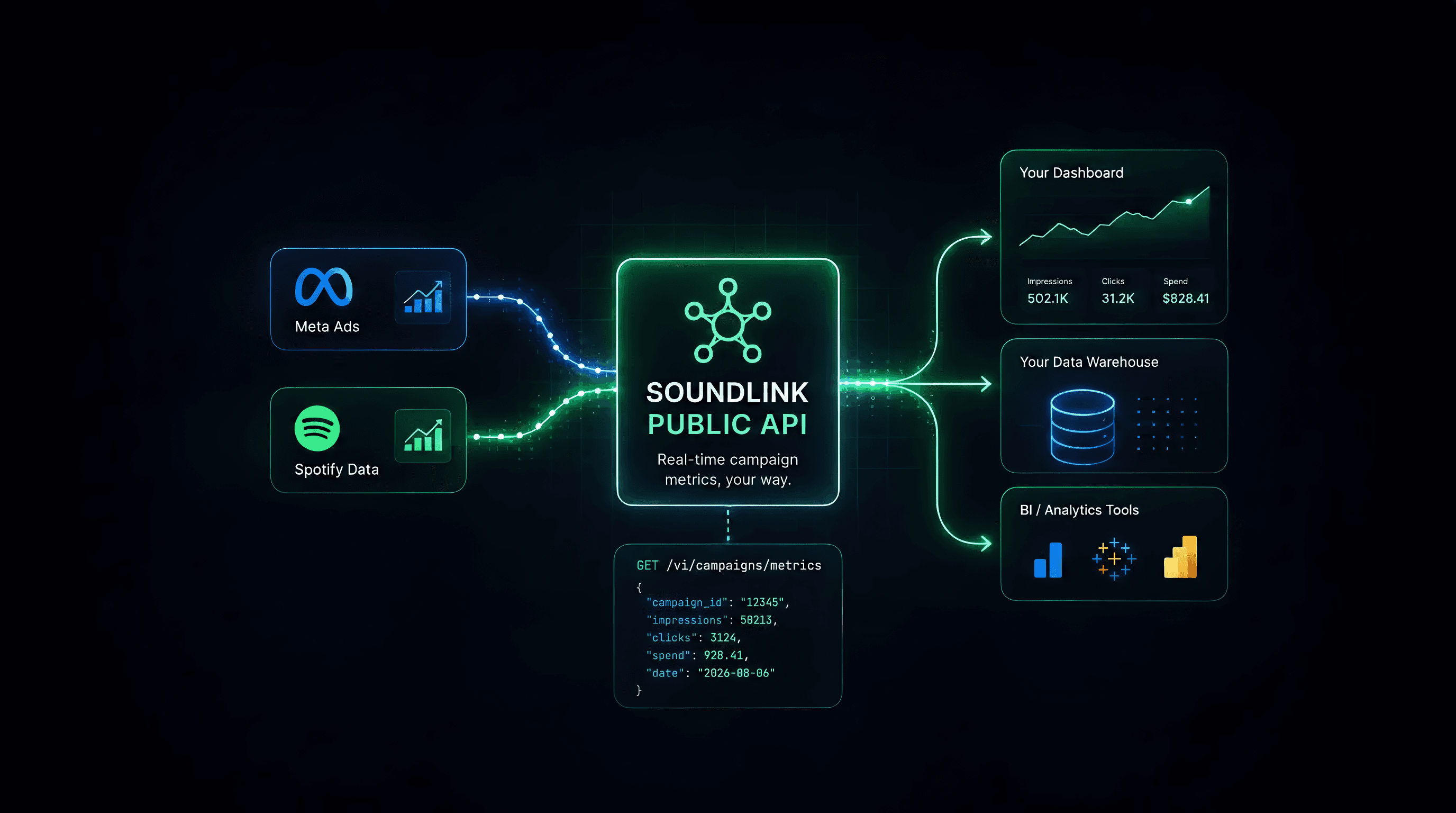
Meta can show impressions, clicks, and campaign performance. Spotify for Artists can show streams, listeners, saves, followers, and source-of-stream data. But those systems do not automatically tell you which ad, audience, creative, or campaign produced which listener behavior.
That gap creates bad decisions. We covered exactly how to close it in our complete guide to tracking Spotify streams from Meta ads.
You may scale a campaign because it has cheap clicks, even though those clicks are not becoming quality listeners. You may pause a campaign because it looks expensive in the ad platform, even though it is driving stronger saves and repeat listening. You may assume one audience is underperforming because the cost per click is higher, while missing that the audience produces better Spotify outcomes.
Attribution helps close that gap.
The purpose of attribution is not just to make reports look better. The purpose is to help you make better marketing decisions. When you can connect campaign activity to downstream listener behavior, you can stop guessing and start optimizing.
That is when music promotion becomes much closer to product growth.
You can identify which creative drives not only clicks, but streams. You can see which audiences produce saves, follows, and repeat listening. You can understand which campaigns are creating temporary activity and which campaigns are building long-term audience value.
Why Direct-to-Spotify Campaigns Are Hard to Measure
Sending listeners directly from an ad to Spotify may seem simple, but it creates a measurement problem.
Once someone leaves the ad platform and opens Spotify, the marketer loses visibility into much of the journey. You can see that someone clicked the ad. You may later see that Spotify streams increased. But connecting those two events is difficult without a proper attribution setup.
This is why many music marketers use smart links, pixels, and conversion events to create a measurable step between the ad and the streaming platform.
They do not solve every attribution challenge, but they give marketers more visibility into intent. They can show which campaign drove a landing page visit, which users clicked through to Spotify, and which audiences or creatives produced higher-quality downstream behavior.
For artists and teams spending real money on promotion, that visibility matters.
Without it, you are optimizing based on incomplete data.
The Product Growth Rule: Double Down on What Works
The most useful rule in growth is simple:
Find what works and do more of it.
But the key is defining “works” correctly.
In music marketing, the campaign that works is not always the one with the cheapest clicks. It is not always the one with the most views. It is not always the one that creates the biggest short-term spike.
The campaign that works is the one that produces meaningful listener behavior at a sustainable cost.
If one audience produces stronger saves, test adjacent audiences.
If one creative angle drives more Spotify listeners, create more variations around that hook.
If one market produces more repeat streams, explore whether it can scale.
If one campaign produces profile visits and catalog listening, treat that as a stronger signal than a campaign that only produces one-track streams.
Doubling down does not mean blindly spending more. It means increasing investment where behavior proves demand.
That is what software teams do when they find a high-converting channel, a sticky feature, or a user segment with better retention.
Artists and music marketers can use the same principle.
A Simple Diagnostic Framework for Music Campaigns
If your campaign is not performing, do not just ask whether it is good or bad. Ask where the funnel is breaking.
If people are not watching the video, the creative may not be earning attention.
If people are watching but not clicking, the hook or call to action may not be strong enough.
If people are clicking but not reaching Spotify, the landing page or platform handoff may be creating friction.
If people are streaming but not saving, the audience may not be the right fit or the song may not be creating enough repeat value.
If people are saving but not following, the track may be stronger than the artist profile or catalog experience.
If people are following and listening again, the campaign may be attracting real fans.
This kind of diagnosis is far more useful than only looking at cost per click.
It tells you what to fix.
Final Thought: Promote Music Like a Pro
Music promotion becomes more powerful when you stop treating it as a guessing game.
A campaign is not just a way to buy attention. It is a way to learn how listeners move from discovery to engagement.
The best marketers measure that journey carefully. They look beyond clicks. They study listener behavior. They identify which audiences respond, which creatives convert, which songs create saves, and which campaigns produce repeat engagement.
That is how software products grow.
They create value, reduce friction, measure behavior, learn from users, and double down on what works.
Music marketers can do the same.
Build something people care about. Put it in front of the right audience. Make the path to listening as easy as possible. Measure what happens after the click. Then scale the campaigns that create real listener behavior, not just surface-level attention.
Because whether you are growing a software product or promoting a song, the principle is the same:
Growth comes from understanding the journey, measuring what matters, and doing more of what the audience proves they want.
How Soundlink Approaches This
Soundlink’s paid campaigns run on Meta with Spotify-side measurement connected to each campaign. The platform reports the metrics that matter at every stage of the funnel (cost per listener, cost per follower, and cost per save) calculated directly from Spotify streaming data rather than inferred from landing page proxies or ad platform signals alone.
This means artists, managers, and labels running campaigns through Soundlink can see exactly where their funnel is performing and where it is leaking. Which tracks generate saves. Which creatives drive repeat listeners. Which campaigns are building long-term audience value rather than short-term stream spikes.
That measurement capability is what makes it possible to run promotion the way software teams run growth: test, measure the full journey, and double down on what the audience proves they want.
Learn more at getsoundlink.com.
FAQ
What is a music marketing funnel?
A music marketing funnel is the listener journey from first discovery to deeper engagement. It spans awareness, link clicks, first streams, saves, follows, repeat listening, and catalog exploration. Measuring each stage separately is what separates promotion that builds a real audience from promotion that only generates temporary activity.
How do you measure Spotify promotion?
Spotify promotion should be measured across the full funnel. Top-of-funnel metrics include impressions, views, clicks, and landing page visits. Spotify-side metrics include listeners, streams, saves, followers, playlist adds, streams per listener, and repeat listening. Connecting ad spend to Spotify outcomes requires an attribution layer between the ad platform and Spotify.
What is a good Spotify save rate?
A Spotify save rate above 3% to 5% is generally a positive engagement signal, especially for broad playlist or cold-audience campaigns. Below 2% may suggest weak fit, passive listening, or poor targeting. However, “good” depends heavily on traffic source, genre, listener intent, and how the rate is calculated. Saves are one of several behavioral signals Spotify may use to understand listener interest, but they should be evaluated alongside repeat listens, playlist adds, streams-per-listener ratio, and source of streams.
Are Spotify saves more important than streams?
Streams matter, but saves are often a stronger sign of listener intent. A stream shows that someone listened. A save suggests that the listener wants to return to the song. Spotify’s recommendation algorithm weights saves and repeat-listen behavior significantly higher than one-time stream volume when deciding which tracks to push into Discover Weekly and Radio.
Why do my music ads get clicks but no Spotify streams?
This usually means there is a breakdown between the ad click and the listening action. The most common causes are:
- Weak listener intent from broad or mismatched targeting
- Friction in the landing page or platform handoff
- Direct-to-Spotify links with no intermediate tracking, so the drop-off is invisible
- A mismatch between the ad creative and the actual song
Read our complete attribution guide for a full breakdown of how to diagnose and fix this.
Can you track Spotify streams from Meta ads?
You can track parts of the journey with smart links, landing pages, pixels, conversion events, and attribution tools. Meta and Spotify do not automatically connect every ad click to downstream Spotify behavior without an attribution layer in between. Read our complete guide to tracking Spotify streams from Meta ads for a full breakdown of how to set this up.
Should artists send ads directly to Spotify?
Direct-to-Spotify campaigns are simple to set up but hard to measure. Once a listener leaves the ad platform and opens Spotify, you lose visibility into whether they streamed, saved, or followed. Most artists and music marketers use a landing page or smart link between the ad and Spotify to track intent, optimize campaigns, and understand what happens after the click.
How do you know when a music campaign is working?
A campaign is working when it produces meaningful listener behavior at a sustainable cost — not just clicks. The clearest positive signals are a save rate above 3%, streams per listener above 1.5, profile visits from listeners who came through the campaign, and returning listeners in subsequent weeks. A campaign that generates cheap clicks but low saves, low repeat streams, and no follower growth is producing traffic, not audience growth.